Getting Ready for Herbal Medicine Making

I have an herbal medicine workshop coming up at the end of next week.  So now I get to think about what we will make this time around.  It's a lovely time of year for herb lore, as we can leave the classroom and go pick plantain and mint for making a cooling liniment just in time for summer. 

My herbal workshop is always my most labor intensive and expensive workshop to prep for.  I run around town going from Asian market to Asian market, to the Chinese herb supply store (to buy herbs found in both Thai and Chinese medicine), to the company I buy oil from and a liquor store for alcohol for tincturing.  If I'm low on jars I'll find myself at the wholesale packaging supply warehouse over in the industrial side of town, watching the warehouse guys drive through the stacks putting together my order.  No other class requires so much driving, so much schlepping stuff around, so many trips between my herb room and my classroom, so much equipment dug out of closets and cupboards (bowls, hot plates, knives, cutting boards, jars, towels, strainers, mortles and pestles...), so much clean up.

So. Much. Fun.

I love my herbal medicine workshops.  I love the smells.  I love the moment a student discovers that there is something magically satisfying about crushing a whole nutmeg seed with a pestle (they crush easily, with this perfect popping crunch, releasing one of the loveliest scents on earth).  I love the inherent space these workshops give for friendly conversation as we patiently heat oils and herbs, or sit rolling herbal pills with our hands, stained yellow from turmeric.  I love going from casual conversation to chanting magical healing incantations in Pali over our accomplishments. 

Exploring Thai herbal medicine is exploring the Thai taste system, and so we get to eat things, from sweet to oh my god is that what astringent is?  We make medicinal teas and discover who has the "I can taste bitter" gene as some sip happily and others make interesting faces while setting their cups aside.  We eat durian.  Oh yes.  Which takes us to food as medicine, and discussions of how to incorporate what we are learning into how we approach basic eating. 
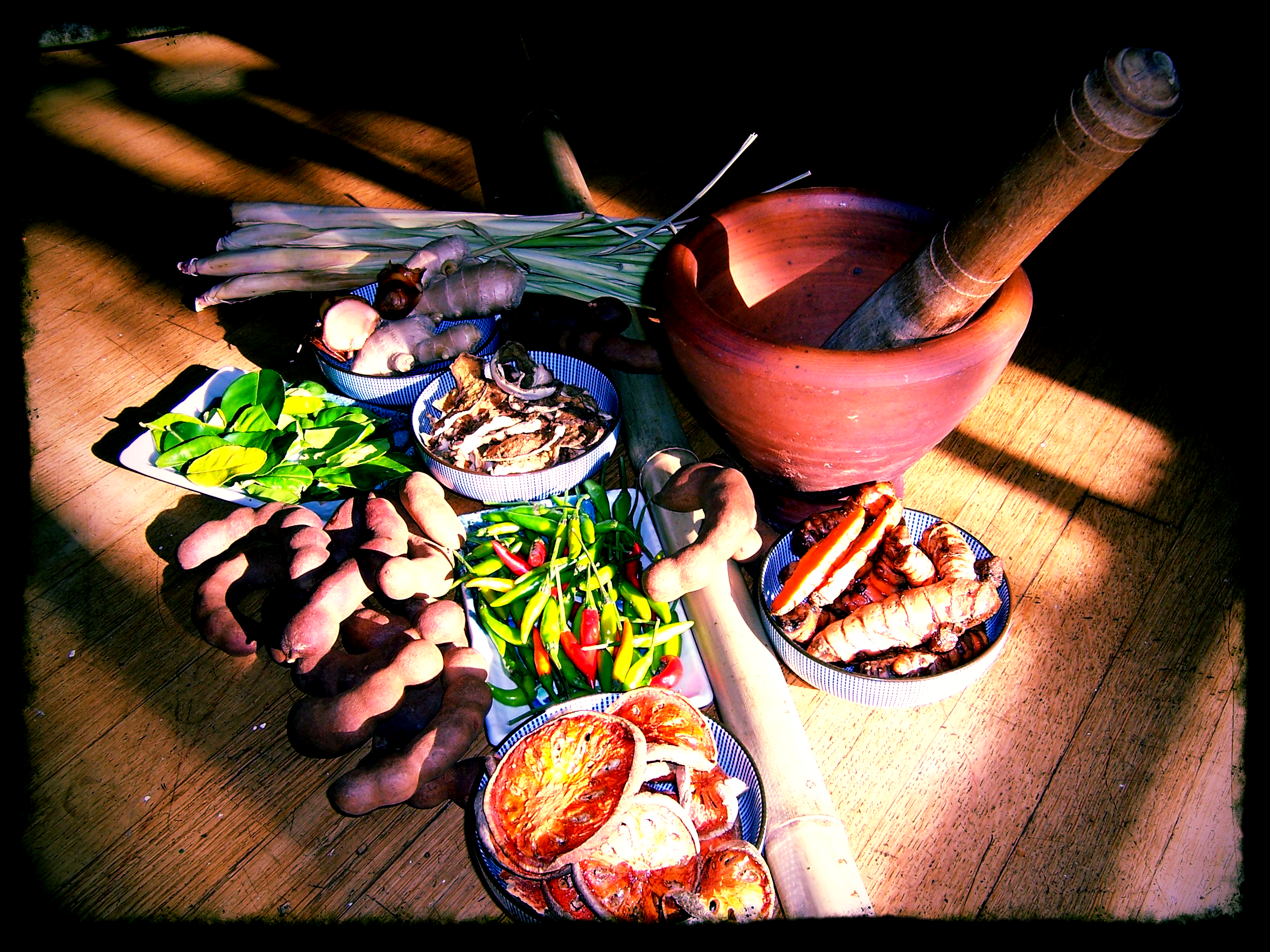

Everyone leaves with treasures.  Little jars of Thai herbal massage balms and liniments, bags of hand rolled pills bound with lime juice or honey, tiny vials of aromatic inhalers whose vapors will ward off a profusion of problems.  There is no promise in this paragraph for those coming to class.  What we make changes from workshop to workshop, so I do not know exactly what you will walk away with; only that it will be something delightful and beneficial. 

At the end, when the supplies are back in their cupboards, the jars of dried herbs back in their alphabetically correct position on the shelves in my herb room, and all of the twigs and dust is vacuumed from the floor, I will be exhausted.  And I probably won't have made much money, as my herbal classes tend to be a low student draw, and high supply cost.  But I will have gotten to share my passion with a little group of wonderful people (for my students tend to be wonderful people), my stock of balms and teas will be replenished, and I will have had so.  much.  fun. 

The Library

The library at The Naga Center might not look so big.  But in that sweet room sits what I believe is the largest traditional Thai medicine library in the world outside of Thailand.  It's no small thing.  When I lived in Thailand, my teacher entrusted me with most of his library, and I mailed home a quarter of a ton of books; this collection occupies one wall of the library.  Many of these books are extremely hard to find medical texts.  Most of them are in Thai, and quite a few are in archaic medical Thai, such that only a small handful of people in the world will be able to read them.  Sadly I am not one of those people; but my teacher is, and when he comes to teach he frequently spends time going through and translating bits of these old texts. 

Along the other walls of the library is an assortment of English language medical texts ranging from the common Thai massage sequence books (yes, I have supported each of you out there who has written a book on Thai bodywork), to books on the medicinal herbs of Thailand.  There is one shelf devoted to books on Buddhism, another to Thai language studies, and even a little corner of the room occupied by western medical books including anatomy and physiology books, and western herbal therapies.  Oh, and there is also a spot for children's books including many Jātaka tales.

It's a medicine library.  Sometimes I go in there and find myself overwhelmed by how much I still have to read.  Other times, most of the time, I'm comforted by the presence of these papery tombs of knowledge.  I look at the wall of Thai language books and I hope that someday a gifted translator with Thai medical know how, will hunker down in there and turn them into texts available in English.  I thumb through books that I cannot read, looking at diagrams and drawings of strange plants, stumbling along with my kindergarten Thai reading abilities, knowing it is not enough for real comprehension. I fear fire.  Most of these volumes are irreplaceable, and I feel the weight of being their caretaker.

Unlike Chinese and Ayurvedic medicine, Thai medicine has not really been studied in the west.  Other than a handful of books on massage techniques, and the few more theory based books put out by myself and Pierce Salguero, there is very little written in English or other western languages.  Westerners are fond of saying that Thai medical knowledge doesn't really exist; that it is all borrowed from other countries, or that all knowledge was lost with the destruction of Ayutthaya.  I've heard people say there is almost nothing written even in Thai.  Yet here I have a wall containing a quarter ton of texts, all of them on the subject of Thai medicine; ranging from herbal therapies to deep visceral manipulations, and from magical spirit medicine to basic food nutrition.  The fact that they have not yet been translated into English does not mean that the knowledge isn't there.  It sits waiting like a secret in plain sight.

When you come to take a class at The Naga Center, I encourage you to sit in the library.  I encourage you to peek inside some of these mysterious old books.  And if you happen to be able to read archaic medical Thai, with the comprehension of one who practices medicine, I invite you to take up residence in the library.  I'll make you muffins and tea. 

Scraping Addendum

Adding to the scraping post of the other day, I want to make clear that while scraping marks are sometimes very dramatic and potentially alarming visually (as in the picture in the last post), when done correctly, scraping is not painful.  It can feel excellent (like an itch being scratched) and it can feel uncomfortable; something that you have to breathe through a little bit; but if it is painful then the practitioner needs to lighten their touch.  The sensation of being scraped should never come close to what the marks make it look like it would feel like. 

Also, scraping should never be done on extremely depleted weak people as it is inherently a depleting therapy (as are all detoxifying therapies.  They are removing things from the body as opposed to nourishing therapies such as heat, application of oils, and nurturing touch).  Everything has its place.

Scraping

Awhile back I came across this article that is mostly about what western type scientific studies have learned about scraping (Khoodt in Thai).  I wrote most of the following for my ongoing online apprentices, and thought I'd copy it over here to share more widely.  It was all phrased as gua sha since western medicine mostly knows about scraping through Chinese medicine, but I'm just gonna use the word scraping because they are just talking about the mechanical effects really, of the main motion of it that is found in all systems of medicine that use it.

Here is the article

And here is my condensation, simplified bullet points of what I got out of the article

•  Scraping produces temporary therapeutic petachiae (pronounced peh-ti-ki-ee, I know!). Petachiae is a western term for the red dotty/bumpy markings. It generally refers to mild vascular hemorrage, but in this case it is considered beneficial

•  Studies showed that scraping produced a 400% increase in superficial blood circulation (that’s a lot!) that stayed that way for about 7 minutes, and took 2 days to fully return to normal.  Think about this - in an area that has had blockage or is in any way dead/numb/depleted, scraping is going to bring an immediate huge flush of circulation, thereby removing toxins, and delivering nutrients to an area.


•  Every subject in the study experienced decreased or resolved pain and reported a greater sense of well being.

•  Scraping has provable anti-inflammatory and immune boosting effects - Yes, traditional medicine has known this forever and day.  Read on to see the western perspective of why.

• It can reduce a fever and alter the course of an acute infectious illness, as well as reduce inflammatory symptoms in chronic illness.  Again, traditional medicine already knew this.

• Okay, here is where we get to the oh so interesting why.  Cruel studies on a mouse showed that scraping upregulates (meaning increases) gene expression for an enzyme that is an anti-oxidant and cytoprotectant (meaning a thing that protects the cells from harm), heme oxygenase-1 (HO-1), was present at multiple internal organ sites immediately after treatment and over a period of days following gua sha treatment.
(what that just said up there is that it causes an increase in an enzyme that protects cells, and this was found around many organs.)

•  Also, this enzyme is anti-inflammatory and antioxidive - it can reduce allergic inflammation, AND it boosts immune response AND it relieves symptoms of Hepatitis B and C, AND it might heal internal organs AND it helps with all kinds of other nasty things like asthma, organ transplant rejection, inflammatory bowel disease and experimental autoimmune encephalomyelitis.  No, I'm not saying that scraping is the new/ancient cure all.  But it has been used for a lot more than muscle aches over the centuries.

• This is all in addition to all the stuff we already knew that scraping can do - Here is a nice list I made that combines things this article said, with stuff I already had on it from Thai medicine.

Releasing excess heat
Treating colds, flus and fevers
Treating many forms of headache including tension affected migraines
Dispersing stagnation
Releasing fascial restriction
Breaking down scar tissue
Reducing inflammation
Treating heatstroke
Relaxing bound muscles
Releasing adhesions
Releasing accumulated waste
Increasing circulation (400% increase in surface circulation of blood)
Releasing stuck wind
Reducing inflammatory symptoms in chronic illness

Scraping is done throughout southeast Asia and in northern Thailand you can find traditional doctors who specialize in it, complete with ceremony and incantations to boost the effect and protect the recipient.  But scraping is also kitchen medicine.  It's done by mothers to the children, and friends to friends.

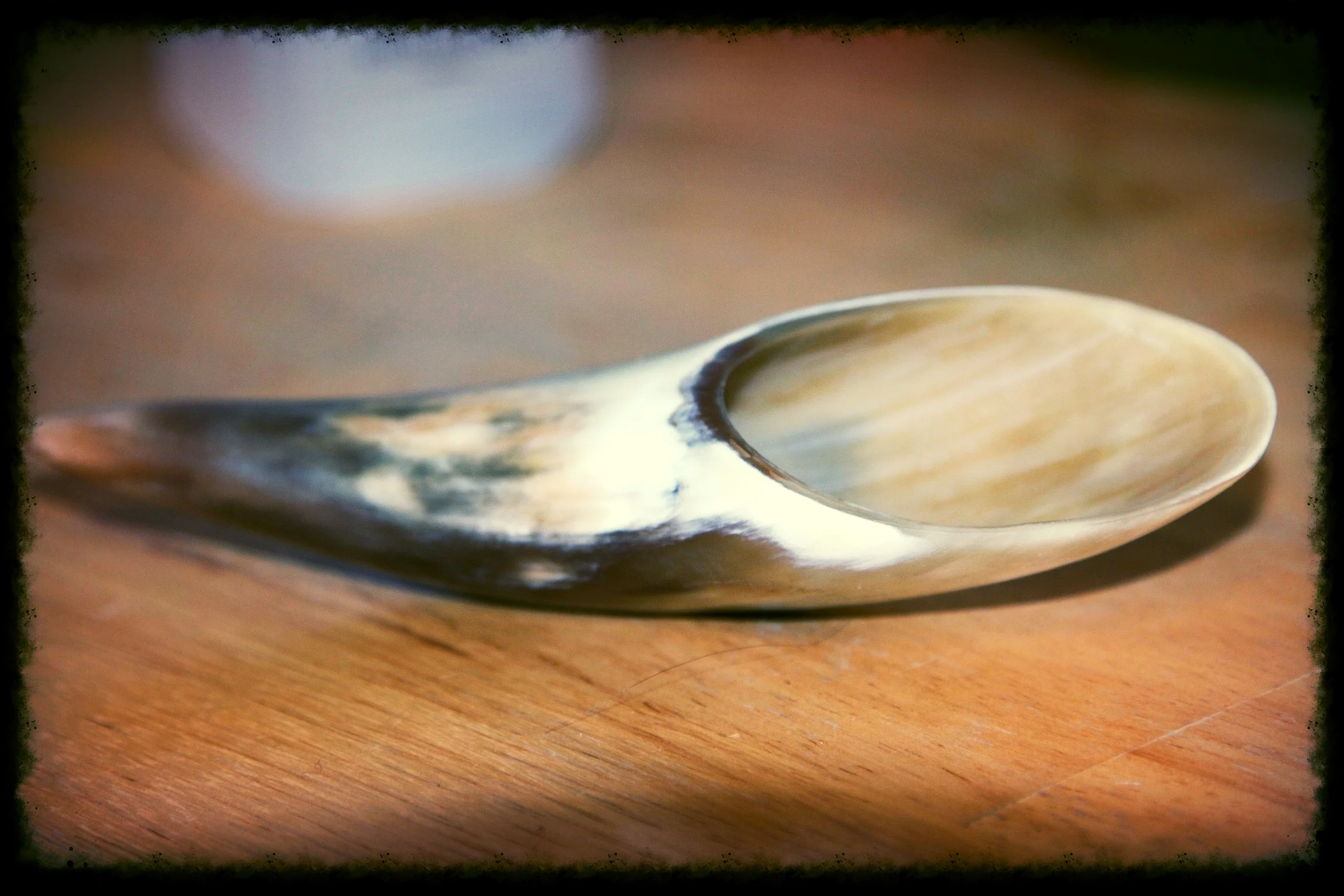
Knowing Thai medical theory takes it from the realm of folk healing into more advanced therapy, and it is an amazing addition to any Thai bodywork practice.  Personally it's a technique that I have a particular affinity for.  Mostly I use porcelain soup spoons to do scraping, but you can see part of my collection of traditional tools in the photo below.  
 

What my teacher said

I'm organizing my notes from when my teacher was here earlier this month and thought I would share some direct quotes.

"listening to the body means we work on a place, listen to what is happening in the body, and adjust our treatment to meet the needs of the body"

"if you don’t go layer by layer, it’s like an assault on the body"

“Many techniques are not necessary - do the same technique over rather than switching it up a bunch.  It's better for sensing if you stick with one technique as you can get feedback from the body easier.  If you keep switching, the body is trying to settle and adjust, and then you switch it up, and the body has to settle and adjust again.  Sometimes it’s good, but not always."

"Medicine and bodywork is no different from any other art form.  Anyone who is really good at music, dance etc., has practiced for a long time.  In medicine the body of knowledge is the same, the techniques are the same, but how it’s expressed is individual to the doctors - but just like piano, they have to first study deeply the proper way."

naga center altar, stylized